• Home
  • Disclaimer
  • Contact
  • 404 Page

review

  • Home
    • Phones
    • TV
    • Ipad
  • About
Welcome

Feel free to explore...

Sony
Showing posts with label Sony. Show all posts

Sony Alpha 7R II Review

Sony Alpha 7R II Review

Sony Alpha 7R II Review


The Sony a7R II is a 42MP full frame mirrorless camera with 5-axis image stabilization, featuring the world's first (and currently only) 35mm BSI CMOS sensor, and including a hybrid autofocus system and 4K video capabilities. It's the fifth in the company's a7 range of full frame cameras and the second high-resolution 'R' model. However, although its name and appearance are very similar to the first round of a7s, the R II arguably represents just as significant a step forwards as those first full frame mirrorless models did.
The reasons for suggesting this are two-fold. Although the a7R II's body is essentially the same as that of the 24MP a7 II (albeit with more substantial magnesium alloy construction), the camera includes two significant changes:
The first is that this is the first full frame camera to feature a sensor based on BSI CMOS technology. Although Sony always stressed that the benefits of BSI designs are most valuable in small sensors, its application on larger scales should reduce the pixel-level disadvantages of moving to higher pixel counts (which means an improvement in quality when viewed at a standard output size).
Secondly, and perhaps, most unexpectedly: the camera's phase-detection autofocus capabilities have been increased to the point that it not only focuses quickly and effectively with its own lenses but can also do so with lenses designed for other systems. This may not sound like a big deal until you think about what Sony needs to do to make the camera a success: win-over dedicated photographers, many of whom are already committed to other systems.

Sony a7R II Highlight specifications

  • 42MP Full Frame BSI CMOS sensor
  • 399 on-sensor Phase Detection points
  • 5-axis image stabilization
  • Internal 4K recording from full sensor width or 'Super' 35 crop
  • Picture Profile system including ITU-709 and S-Log2 gamma
  • Full magnesium alloy construction
  • 2.36m dot OLED viewfinder with 0.7x magnification
  • High speed AF with non-native lenses
The rest of the camera's core capabilities are exactly as you would expect from a high-resolution camera at this level: weather-sealed magnesium alloy body, twin control dials, extensive customization of control points and 5fps shooting.
The camera's video capabilities, though, are well worth highlighting. Like the recently-released, and more video-focused a7S II, the a7R II can record 4K (UHD) video internally. But, unlike the a7S II, its sensor has enough resolution to shoot using a near full-frame crop or a Super 35 (~APS-C) crop. In fact, the camera is over-sampling when you shoot Super 35 4K - which should help control moiré. These two modes should let you choose between the shallow depth-of-field and low-light capability of using the full sensor, vs. the effective extra reach and greater lens compatibility of Super 35 mode (though our testing shows this isn't quite the case).
 Sony a7R IISony a7RSony a7 IISony a7S II
Sensor42MP full-frame36MP full-frame24MP full-frame12MP full-frame
Image StabilizationIn-bodyIn-lens onlyIn-bodyIn-body
Electronic First Curtain ShutterYesNoYesYes
Silent (full electronic) ShutterYesNoNoYes
ISO Range (Stills)
Standard / Expanded
100 - 25,600
50 - 102,400
100 - 25,600
50 - 25,600
100 - 25,600
50 - 25,600
100-102,400
50-409,600
Continuous Shooting (with AF)5 fps1.5 fps5 fps2.5 fps
AF systemHybrid (399 phase detect and 25 contrast detect points)Contrast AF with 25 pointsHybrid with 117 phase detect and 25 contrast detect pointsContrast AF with 169 points
4K from Super 35 crop?YesNoNoNo
4K Movie specsUHD 30/24p
XAVC S (100/60Mbps)
N/AN/AUHD 30/24p
XAVC S (100/60Mbps)
HD Movie specs1080 60/30/24p
(50Mbps)
XAVC S
1080 60p
(28Mbps)
60i/24p (24/17Mbps)
AVCHD
1080 60/30/24p
(50Mbps)
XAVC S
1080 120p (100/60Mbps) 60/30/24p
(50Mbps)
XAVC S
Picture Profile
(inc S-Log2)
YesNoYesYes
+ S-Log3
Front panel constructionMagnesium alloyMagnesium alloyCompositeMagnesium alloy
Optical low pass filterNoNoYesYes
Battery life (CIPA)
LCD/EVF
340/290 shots per charge340/270 shots per charge350/270 shots per charge370/310 shots per charge
Weight w/ battery625 g465 g599 g627 g
MSRP$3,199 body only$2,299 body only$1,699 body only$2,999 body only

(Lossy) Compressed Raw

Although, at launch, the a7R II only offered Sony's lossy compressed Raw files, which can reduce the processing flexibility of the files, the company has promised a firmware update allowing uncompressed 14-bit Raws. The dynamic range and Raw analysis section of our review is based on these uncompressed files.

Sony A6300 Review

Sony A6300 Review

Sony A6300 Review


image of Sony Alpha ILCE-A6300

A6300 SUMMARY

The Sony A6300 serves as the follow-up to one of the most popular cameras in recent years, the A6000. Given the predecessor's top marks, it's a tough act to follow. Sony's pulled it off, though, packing in so many new features and performance improvements. Featuring better build quality, a new high-speed sensor, vastly improved AF and burst performance, better image quality and advanced video features, the Sony A6300 is a significant upgrade. Is it finally time to downsize from that DSLR? Read our in-depth Sony A6300 review to find out!
PROS
Excellent image quality; Improved high-ISO performance; Better JPEG quality; Fast autofocus; Very good subject tracking with real-time live view feature; All-magnesium body construction; 4K video.
CONS
Slow buffer clearing (no UHS-II support); No touchscreen, Clunky menus; Wi-Fi can be a bit frustrating to use.
PRICE AND AVAILABILITY
The Sony A6300 began shipping in the US market from March 2016. List price is around US$1,000 body-only, or US$1,150 when bundled with Sony's 16-50mm f/3.5-5.6 kit lens, a retractable optic with power zoom and Optical SteadyShot image stabilization.
IMAGING RESOURCE RATING
5.0 out of 5.0
Similar to the A6300smallerlighterlarger sensorcheaperBut ...

Fujifilm X-Pro2
Dave's pick
$1798.67 (43% more)
24.3 MP
Also has viewfinder
27% larger
A6300 VS X-PRO2
Samsung NX500
Dave's pick
$568.88 (79% less)
28.2 MP (14% more)
Lacks viewfinder
21% smaller
A6300 VS NX500
Sony A6000
Dave's pick
$548.00 (86% less)
24.3 MP
Also has viewfinder
8% smaller
A6300 VS A6000
Samsung NX30
Dave's pick
$592.63 (72% less)
20.3 MP (19% less)
Also has viewfinder
23% larger
A6300 VS NX30
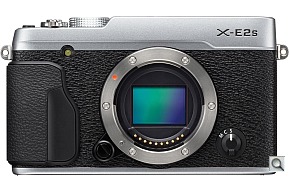
Fujifilm X-E2S
Dave's pick
$699.32 (46% less)
16.3 MP (48% less)
Also has viewfinder
9% smaller
A6300 VS X-E2S
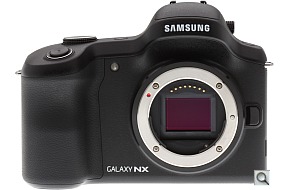
Samsung Galaxy NX
Dave's pick
$1124.48 (9% more)
20.3 MP (19% less)
Also has viewfinder
10% smaller
A6300 VS GALAXY NX
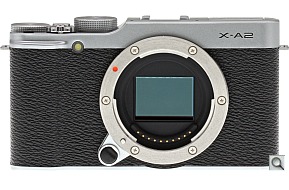
Fujifilm X-A2
Dave's pick
$549.00 (86% less)
16.3 MP (48% less)
Lacks viewfinder
25% smaller
A6300 VS X-A2
Canon EOS M3
Dave's pick
$429.00 (137% less)
24.2 MP
Lacks viewfinder
17% smaller
A6300 VS EOS M3
Fujifilm X-T1 IR
Dave's pick
$1699.00 (40% more)
16.3 MP (48% less)
Also has viewfinder
28% larger
A6300 VS X-T1 IR
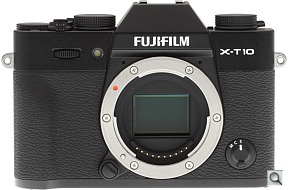
Fujifilm X-T10
Dave's pick
$599.00 (70% less)
16.3 MP (48% less)
Also has viewfinder
Similar size
A6300 VS X-T10
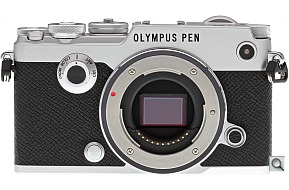
Olympus PEN-F
Dave's pick
$1199.00 (15% more)
20.3 MP (19% less)
Also has viewfinder
17% smaller
A6300 VS PEN-F
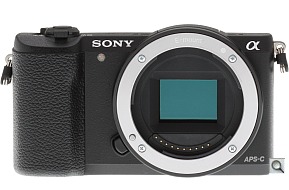
Sony A5100
Dave's pick
$448.00 (127% less)
24.3 MP
Lacks viewfinder
59% smaller
A6300 VS A5100
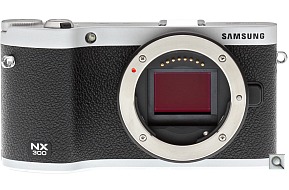
Samsung NX300
Dave's pick
$437.45 (133% less)
20.3 MP (19% less)
Lacks viewfinder
24% smaller
A6300 VS NX300
Panasonic GX8
Dave's pick
$1064.66
20.3 MP (19% less)
Also has viewfinder
40% larger
A6300 VS GX8
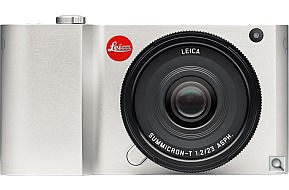
Leica T (Typ 701)
Dave's pick
$1629.00 (37% more)
16.3 MP (48% less)
Lacks viewfinder
28% smaller
A6300 VS T (TYP 701)
Sony A5000
Dave's pick
$448.00 (127% less)
20.1 MP (20% less)
Lacks viewfinder
59% smaller
A6300 VS A5000
Panasonic GX85
Dave's pick
$797.99 (28% less)
16 MP (51% less)
Also has viewfinder
Similar size
A6300 VS GX85
Fujifilm X-E2
Dave's pick
$499.00 (104% less)
16.3 MP (48% less)
Also has viewfinder
9% smaller
A6300 VS X-E2
Samsung NX3000
Dave's pick
$314.95 (223% less)
20.3 MP (19% less)
Lacks viewfinder
30% smaller
A6300 VS NX3000
Olympus E-M5 II
Dave's pick
$899.00 (13% less)
16.1 MP (50% less)
Also has viewfinder
16% larger
A6300 VS E-M5 II
Suggestion for improvement? Head over here.

Sony A6300 Review

by Mike Tomkins, Jeremy Gray, Zig Weidelich, and William Brawley
Preview originally posted: 02/03/2016
Updates:
03/01/2016: Gallery Images added
03/04/2016: Sony A6300 First Impressions, by Jeremy Gray
03/22/2016: First Shots added
04/01/2016: Performance test results added
04/11/2016: Image Quality Comparison and Print Quality added

04/26/2016: Field Test added
05/25/2016: Review Conclusion added

Sony A6300 Review -- Product Image
In mid-2014, Sony launched a product with spectacular appeal. The Alpha A6000, says its maker, is not only the best-selling mirrorless camera to date, but also the best-selling interchangeable-lens camera with a pricetag at or above US$600. Now, it follows up with the Sony A6300, a camera which has one very tough act to follow -- but it looks to be more than up to the task.
The Sony A6300 keeps most everything which made its predecessor so popular, but makes some very worthwhile changes. Key among these are a new image sensor and updated image processing algorithms which, together, bring lower noise levels and much-improved autofocus. There's also a brand-new, higher-resolution electronic viewfinder, and its made all the more useful by the ability to shoot with a live-view feed at rates of up to an impressively-swift eight frames per second. Add in some great refinements to the camera's video capture capabilities, and the Sony A6300 looks to be a very promising product indeed.

The Sony A6300's body is very familiar, but with a couple of control tweaks

If you've shot with its predecessor, the Sony A6300's magnesium-alloy body will look very familiar indeed. Its height and width are identical to those of the earlier camera, while its depth has increased by a scant 0.14 inches (3.6mm), a change that comes accompanied by a slight 2.12 ounce (60g) increase in weight. Almost all of the external controls and design elements remain right where they were in the previous model. In fact, there are only a couple of control changes with which you'll need to familiarize yourself.
Sony A6300 Review -- Product Image
The first of these can be found on the top deck, where the mode dial no longer has separate iAuto and Superior Auto (iAuto+) positions. Both modes are still there, but they're now grouped beneath a single Auto position on the dial, a change which frees up space for a second Memory Recall mode instead.
That tweak will surely please more experienced photographers, as will the other significant control change: a new switch with central button on the rear deck, replacing the earlier camera's autoexposure lock button. With the switch at the bottom of its throw, the button will still provide AE lock capability, but if the switch is flicked upwards, you'll instead be able to toggle focus between automatic and manual control.
Sony A6300 Review -- Product Image

The A6300 is rugged, but a question mark on weather-sealing

The new body of the Sony A6300 should also prove more rugged than that of its predecessor, according to Sony. Look beneath the surface -- which, we noted in our hands-on with the camera, has a more matte finish than in the past -- and you'll find a newly reinforced lens mount structure.
Sony also notes that it has improved the A6300's dust and moisture-resistance compared to the earlier camera, although there's something of a question mark in this area. In its press materials, Sony notes that while the A6300 "is designed for optimal dust and moisture resistance," it is "not waterproof or splashproof". What precisely merits consideration as a splash versus just moisture isn't really clear, but we wouldn't recommend using the Sony A6300 in more than a light sprinkle of rain.
Still, that's more than enough for many photographers, even if we'd like to see clearer guidance from the company as to just what level of moisture the A6300 should be able to handle.
Sony A6300 Review -- Product Image

The Sony A6300 gets a new high-performance sensor; same high resolution

At the heart of the Sony A6300, you'll find the same pairing of a 24-megapixel CMOS image sensor and BIONZ X image processor that formed the foundation of the A6000. It's not the same sensor as before, though. The newly-designed chip has the exact same output resolution of 6,000 x 4,000 pixels, but it now uses copper wiring for improved readout performance and a better signal-to-noise ratio. It also sports almost 2.4 times as many on-chip phase-detect autofocus pixels as in the earlier camera, a change we'll be discussing in more depth momentarily.
Although the standard sensitivity range of ISO 100 to 25,600-equivalents remains unchanged from the A6000, there's now an ISO expansion function which will raise the upper limit to ISO 51,200-equivalent without resorting to Multi-frame Noise Reduction (though MFNR is still supported), and the camera also shows lower noise levels from the new imaging pipeline in the A6300.
Although performance has clearly been a design goal for Sony during development of the A6300, its maximum burst capture rate remains unchanged at 11 frames per second. Burst depth at this maximum speed is also as near as makes no difference unchanged, with a predicted 44 large / extra fine JPEG frames or 21 RAW / RAW+JPEG frames in a burst (which we confirmed in our performance lab tests). However, you now have a choice of more burst capture frame rates -- 11, eight, six or three fps -- and that second-from-top option is much more usable than ever before.
Sony A6300 Review -- Product Image

The A6300 delivers a much more satisfying burst capture experience

The reason for the improvement is that Sony has worked to resolve one of the main bugbears of the electronic viewfinder. Traditionally, EVFs are frowned on by sports shooters because what you're seeing between frames captured in a high-speed burst isn't a live view of your subject, but rather the image that was just captured. That means there's a lag between the action in the real world and what you see through the viewfinder. That remains true for the Sony A6300 at its maximum burst capture rate, but not when you drop the rate to eight fps.
At this somewhat-reduced rate, the camera shows a real live view feed, punctuated by a series of brief blackouts as each frame is captured. This is akin to what you'd see with a traditional DSLR, which must also have a viewfinder blackout every time the mirror is raised to allow light to reach the image sensor, and so it makes shooting with the A6300 much more DSLR-like. And our reviewer found this new function really did make it much easier to track moving subjects.

The Sony 6300 viewfinder is much sharper and (optionally) faster, too

This improved method of burst shooting with a live view feed comes predominantly thanks to the new, faster readout of the image sensor. The overall experience is also aided by improvements to the viewfinder itself, though.
Although the electronic finder in the Sony A6300 has the same 0.39-inch OLED panel size as before, along with the same manufacturer-rated 100% coverage, 1.07x magnification (35mm equivalent: 0.7x), 23mm eyepoint and -4 to +3m-1 diopter adjustment, it now bests that in the earlier camera in two key ways.
Firstly, total resolution has increased by 63%, with a dot count of 2,359,296 dots instead of the 1,440,000 dots in the earlier camera. Secondly, you can now adjust the viewfinder frame rate for smoother motion. As well as the standard rate of 60 frames per second, the viewfinder refresh can now be boosted to a swift 120 fps.
Sony A6300 Review -- Product Image

Record-setting autofocus (in more ways than one!)

Another major area of improvement in the Sony A6300 can be found in its autofocus system. We already touched on this very briefly in our discussion of the new image sensor, but there's a whole lot more to this particular story.
Still branded as "4D Focus", the AF system in the Sony A6300 now has vastly more focus points to choose from than before, and helpfully, these cover almost the entire field of view. Sony tells us that with a total of 425 phase-detect autofocus points on offer, the A6300 has the most PDAF points of any mirrorless camera to date. Add in a further 169 contrast-detect points, and there truly is spectacular AF point density. (Compare those numbers to "just" 179 PDAF and 25 CDAF points in the earlier camera.)
This high point density pays dividends when it comes to autofocus tracking, as the camera has much more information to work with than ever before. As your subject moves, the Sony A6300 can now follow it around the frame much more accurately. And as an added bonus, you'll also be able to use the PDAF points with adapted Sony Alpha-mount lenses, just as you can in recent Sony A7-series full-frame cameras. That's a first for one of the company's APS-C sensor-shod cameras.
Sony A6300 Review -- Product Image
And nor is that all. Sony is also claiming that the autofocus system in the A6300 is just fractionally faster than the record-setting system in the A6000, taking just 0.05 seconds to determine a focus lock. (Of course, you'd be hard-pressed to notice a difference in the real world, as the earlier camera could lock focus in 0.06 seconds, but we'd imagine shaving off yet another hundredth of a second was no small task.) And yes, that AF performance merits yet another world's first, according to Sony.
Other AF improvements include the availability of Eye AF when shooting with continuous autofocus, just as seen in recent A7-series cameras, along with the ability to combine the focus magnifier function with autofocus, and an expanded flexible spot AF function. There are also some improvements for movie capture specifically, as we'll see in a moment.

Silent shooting and better bracketing

In most respects, the Sony A6300's exposure capabilities mirror those of the earlier camera. A couple of points stood out to us on inspecting the new model's specifications, however. For one thing, there's now a silent shooting mode, which should make this a much better option for nature photography, weddings, or anything else where shutter noise might startle or distract your subjects. There's also a more generous exposure bracketing function. Previously, the A6000 limited you to just five frames in a bracketed set, or three frames if your step size was 1EV or greater. Now, the Sony A6300 will shoot as many as five frames with a 3EV step size, or nine frames with a step size up to 1EV.
Sony A6300 Review -- Product Image

The A6300 is a much more capable video shooter

Sony has made quite a few improvements to the video feature set of the A6300. We already hinted at one of these a moment ago in our discussion of autofocus: The company claims that the new camera can focus twice as fast during movie capture, when compared to the earlier model. Of course, swift autofocus isn't always a good thing for movies, so you can also now adjust autofocus speed and tracking sensitivity, if you want to dial things back for less jarring transitions.
Sony A6300 Review -- Product Image
The Sony A6300 is also the company's first APS-C camera with Super 35mm-format, 4K video capture capability. Recorded using XAVC S compression -- itself a new addition -- the A6300's 4K video is downsampled from a full 6K of data read off the image sensor, with no pixel binning taking place. And if you'd prefer to favor frame rate over resolution, another first for Sony's APS-C lineup is the ability to capture Full HD video at 120 frames per second with a 100 Mbps bitrate.
There's also a new 3.5mm external microphone jack on the Sony A6300, which allows you to use an external mic without any proprietary accessories. (Previously, you'd have needed one of Sony's Multi Interface Shoe mics or adapters.) And the maximum sensitivity in movie mode has now been raised from ISO 12,800 to 25,600-equivalent.
Sony has added a Gamma Display Assist function which makes it easier to keep tabs on focus and framing when shooting S-Log movies. S-Gamut is also available, and the A6300's zebra striping function has been improved too. You can now use picture profiles and capture time code / user bit data as well.

Significantly better battery life, too

One last change which really stood out to us is the impressive improvement Sony has made in the A6300's battery life. The earlier A6000 was limited to 360 shots on a charge with the LCD monitor, or just 310 frames when shooting using the electronic viewfinder. The Sony A6300 boosts this to an impressive 400 frames on the LCD, which represents an 11% improvement -- and that's when using the exact same NP-FW50 battery packs as in the earlier camera. When using the EVF, there's an even greater 13% gain, with a total of 350 shots now possible on a charge. That's almost as many frames with the A6300's finder as the A6000 was able to manage on the LCD panel!
Sony A6300 Review -- Product Image

In other respects, the Sony A6300's features are similar to the A6000

All of this represents a lot of improvement in areas which will really benefit Sony A6300 owners. On paper at least, the new model is otherwise quite similar to its predecessor. The A6300 still natively-accepts Sony E-mount lenses as well as a wide range of first- and third-party glass using adapters, and relies on the attached lens for image stabilization.
The rear-panel display is still a 3.0-inch LCD with 921,600-dot resolution, and shutter speeds from 1/4,000 to 30 seconds plus bulb are still possible. X-sync remains at 1/160 second, and there are still both a popup flash and Sony's proprietary Multi Interface Shoe for external strobes.
Connectivity still includes both USB data and HDMI video outputs, and there's still Wi-Fi wireless networking connectivity plus an NFC radio for easy pairing with Android devices. And as you'd expect in a modern Sony camera, you can supplement the basic features with the company's PlayMemories Camera Apps -- some free, some available for a small cost -- to enable features like remote camera control, time lapse photography and a whole lot more besides.
Sony A6300 Review -- Product Image

Pricing and availability

The Sony A6300 began shipping in the US market from March 2016. List price is around US$1,000 body-only, or US$1,150 when bundled with Sony's SELP1650 kit lens, a retractable 16-50mm f/3.5-5.6 optic with power zoom and Optical SteadyShot image stabilization.

Older Posts
Subscribe to: Posts (Atom)

Search This Blog

Arsip Blog

  • ▼  2018 (11)
    • ▼  November (1)
      • 29 cool way to design your nails for beginners
    • ►  June (1)
    • ►  May (2)
    • ►  March (5)
    • ►  February (2)
  • ►  2017 (7)
    • ►  November (1)
    • ►  September (1)
    • ►  August (3)
    • ►  July (2)
  • ►  2016 (19)
    • ►  June (19)

Entri Populer

  • HTC One M9 review
    PROS Beautifully crafted and well-designed Speedy processor Sense Home works brilliantly Great front-facing camera Bes...
  • Sony Xperia Z5 review
    Sony Xperia Z5  review PROS Fantastic display Camera works well in varying conditions Excellent fingerprint scanner ...
  • Samsung Galaxy J2 Review
    Samsung Galaxy J2 Review At a time when Chinese manufacturers were offering amazing features on smartphones at rock-bottom prices, ...
  • YouGov Review
    Too many students want to get money! To buy something: a game, a book, or anything The challenge is always that he does not have eno...
  • إصلاح الأخطاء في الفيجوال ستوديو - Fix and reset the Visual Studio
    إصلاح الأخطاء في الفيجوال ستوديو - Fix and reset the Visual Studio
  • Samsung Galaxy S6 Edge review
    Samsung Galaxy S6 Edge  review PROS Best cameras on any phone Innovative design Superb build quality Fantastic screen...
  • طريقة إنشاء مشروع جديد في الأندرويد ستوديو - How to create new project i...
    طريقة إنشاء مشروع جديد في الأندرويد ستوديو - How to create new project i...
  • إصلاح مشاكل الجهاز الإفتراضي في الأندرويد ستوديو - Fix Virtual Device Er...
    إصلاح مشاكل الجهاز الإفتراضي في الأندرويد ستوديو - Fix Virtual Device Er...
  • 29 cool way to design your nails for beginners
    Hello! Are you willing to learn how to draw and design your nails? here it is : https://youtu.be/sy3edmcbvbk
  • Sony A6300 Review
    Sony A6300  Review A6300 SUMMARY The Sony A6300 serves as the follow-up to one of the most popular cameras in recent yea...

Label

  • Companies
  • designing
  • drawing
  • earning
  • HTC
  • Huawei
  • IPhone
  • LG
  • Nokia
  • Paypal
  • Program
  • Samsung
  • Sony
  • Toshiba
  • websites
  • XBOX
Copyright © 2015 review All Right Reserved. Designed by Arlina Design | Distributed By Gooyaabi Templates